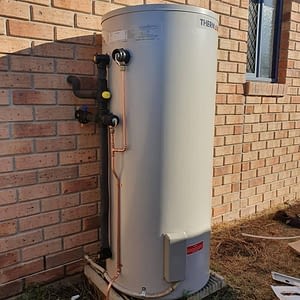
Replace your hot water system if it’s over 8–12 years old, leaking, producing inconsistent temperatures, making unusual noises, or showing rust. These signs indicate potential failure, risking water damage or high energy costs. Assess the system’s age and repair costs versus replacement to make an informed decision.
Hot Water System Lifespans by Type
| System Type | Expected Lifespan | Key Characteristics | Maintenance Impact |
|---|---|---|---|
| Gas | 8-12 years | Shorter-lived but cost-effective operation | Annual servicing can extend life 2-4 years |
| Electric | 10-15 years | Longer service life, fewer moving parts | Hard water reduces lifespan to 8-10 years |
| Heat Pump | 15 years | Superior longevity, advanced technology | Climate conditions affect performance |
| Solar | 10 years | Moderate lifespan, component variations | More maintenance required but extends life |
| Tankless | 20 years | Longest service life, no storage corrosion | Regular descaling essential |
Detailed System Analysis
Gas Systems face unique challenges including combustion byproducts causing internal corrosion and temperature cycling stress. Coastal areas experience accelerated deterioration due to salt air exposure. Performance decline appears through pilot light issues and reduced burner efficiency.
Electric Systems primarily fail through heating element burnout or tank corrosion. Water quality significantly impacts lifespan – hard water areas may see reduced lifespans while soft water areas can achieve 15+ years with maintenance.
Heat Pump Systems contain refrigeration components requiring specialized service but prove more reliable than conventional systems. Technology advancement means newer units may exceed the 15-year average.
Tankless Systems avoid storage tank failure modes, contributing to extended lifespan. However, heat exchangers require careful maintenance and are sensitive to water quality.
Critical Warning Signs for Replacement
Recognizing replacement indicators early prevents emergency situations and allows time for competitive pricing. These signs indicate when repair costs exceed replacement value.
Age and Performance Indicators
| Warning Sign | Urgency Level | Typical Action |
|---|---|---|
| System over 10 years with frequent repairs | High | Consider replacement |
| No hot water production | Critical | Professional assessment needed |
| Inconsistent water temperatures | Medium | Evaluate repair vs. replacement |
| Sizzling noise from tank | Critical | Immediate replacement required |
| Rust around fittings/brown water | High | Tank corrosion indicates replacement |
| Recovery time significantly increased | Medium | Major component problems likely |
Physical Deterioration Signs
Visual Indicators:
- Rust around fittings or brownish hot water signals tank corrosion
- Visible tank swelling or deformation indicates structural problems
- Leaks from valves, pipes, or tank require immediate attention
Audible Warnings:
- Sizzling noise indicates serious internal problems
- Unusual operational sounds suggest component failure
Performance Issues:
- Declining hot water pressure with normal cold pressure
- Extended recovery times for heating water
- Rising energy bills despite consistent usage
Repair vs. Replacement Decision Framework
Making informed decisions requires systematic cost and condition analysis.
Financial Analysis Criteria
| Decision Factor | Repair Recommended | Replacement Recommended |
|---|---|---|
| Cost Rule | Repair cost <50% of replacement | Repair cost >50% of replacement |
| System Age | Under 8 years | Over 10 years |
| Repair Frequency | First major repair | Multiple repairs annually |
| Energy Efficiency | Minimal decline | Significant increase in bills |
| Safety Issues | Minor problems | Gas leaks, electrical hazards |
Strategic Considerations
Proactive vs. Reactive Planning: Taking action before breakdown provides research time and better pricing. Emergency replacements cost 20-40% more and limit options.
Seasonal Timing: Planning replacement during low-demand periods offers better installer availability and competitive pricing compared to emergency winter situations.
Technology Opportunities: New systems provide improved efficiency, reliability, and features that may justify replacement of functioning but outdated units.
Most Reliable Hot Water System Brands
| Brand Tier | Brands | Key Strengths | Best For |
|---|---|---|---|
| Premium | Rheem, Rinnai, Bosch, Dux | Superior engineering, extended warranties | Long-term reliability |
| Mid-Range | Thermann | Balance of cost and features | Value-conscious buyers |
| Budget | Aquamax, Saxon | Lower purchase cost | Cost-constrained situations |
Brand Selection Criteria
Essential Factors:
- Local service network availability
- Comprehensive warranty coverage
- Parts availability throughout system life
- Technology integration capabilities
Premium brands typically offer superior warranty terms and maintain parts inventory longer, ensuring service availability throughout expected lifespan and beyond.
Maximizing Current System Lifespan
| Maintenance Task | Frequency | Lifespan Extension | Cost vs. Benefit |
|---|---|---|---|
| Professional Service | Annual | Indefinite with proper care | High ROI |
| Anode Rod Replacement | Every 3-5 years | Significant tank protection | Medium cost, high benefit |
| System Flushing | Annual | Maintains efficiency | Low cost, high benefit |
| Temperature Optimization | As needed | Balances efficiency/longevity | No cost, high benefit |
Water Quality Management
Understanding local water conditions helps optimize maintenance schedules. Hard water areas require more frequent service, while water treatment systems can extend life by reducing mineral buildup and corrosive elements.
Usage Optimization
Efficient practices reduce system cycling and component stress:
- Shorter shower durations
- Lower washing temperatures
- Proper system insulation
- Pressure management to prevent component wear
Decision Framework for Your Situation
Household Assessment
| Factor | Early Replacement | Repair/Maintain |
|---|---|---|
| Family Size | Large families (reliability critical) | Small households |
| Budget | Financing available | Limited immediate funds |
| Property Plans | Long-term ownership | Short-term/selling soon |
| Reliability Needs | Elderly/medical requirements | Standard usage |
Professional Consultation Benefits
Expert Assessment: Objective analysis of system condition and replacement economics based on technical expertise.
Technology Guidance: Navigate options, sizing requirements, and system selection based on household needs and local conditions.
Installation Quality: Ensures optimal performance, warranty coverage, and code compliance.
Financial Analysis Tools
Total Cost Calculation
When evaluating replacement, consider:
| Cost Category | Current System | New System |
|---|---|---|
| Repair Costs | Annual repair expenses | Warranty coverage |
| Energy Costs | Declining efficiency | Improved efficiency savings |
| Reliability | Breakdown risks | Predictable performance |
| Maintenance | Increasing requirements | Reduced needs initially |
Rebate Opportunities
Government rebates and utility incentives can significantly improve replacement economics. Timing replacement to coincide with available programs maximizes return on investment.
When to Act: Decision Timeline
Immediate Action Required
- No hot water production
- Sizzling sounds from tank
- Gas leaks or electrical hazards
- Visible tank damage or leaks
Plan Within 6 Months
- System over 10 years with declining performance
- Repair costs approaching 50% of replacement
- Multiple component failures
Monitor and Plan
- System 8-10 years old with good performance
- Single component failures on newer systems
- Rising energy costs but reliable operation
Frequently Asked Questions
How to tell if a hot water heater needs replacement?
Key replacement indicators include systems over 10 years old with frequent repairs, no hot water production, sizzling noises from the tank, rust around fittings or brown water, and leaks from valves or pipes. If your system shows multiple warning signs or requires expensive repairs exceeding 50% of replacement cost, replacement typically provides better value than continued repairs.
How long should a hot water heater last?
Hot water system lifespans vary by type: gas systems 8-12 years, electric systems 10-15 years, heat pumps 15 years, solar systems 10 years, and tankless systems 20 years. Actual lifespan depends on maintenance quality, local water conditions, and usage patterns. Well-maintained systems in favorable conditions often exceed expected lifespans.
Is it worth fixing a hot water heater?
Repair value depends on system age, repair cost, and expected remaining life. If repair costs exceed 50% of replacement cost, or if the system is over 10 years old requiring frequent repairs, replacement typically provides better long-term value. Simple repairs on newer systems (under 8 years) usually warrant fixing rather than replacement.
At what age should a hot water heater be replaced?
Storage systems should ideally be replaced once they reach the 10-year mark to balance remaining reliability against increasing repair probability. However, replacement timing depends on performance, reliability, and repair frequency rather than age alone. Well-maintained systems may operate effectively beyond expected lifespans, while neglected systems may require earlier replacement.
How often do hot water heaters fail?
Failure frequency increases significantly after 8-10 years of service. System efficiency starts declining once they hit the 8-12 year mark, often manifesting as longer heating times and inconsistent temperature control. Systems requiring repairs more than once annually after age 8 typically indicate approaching end-of-life and increased failure probability.
What is the most reliable brand of hot water heater?
Premium brands like Rheem, Rinnai, Bosch, and Dux offer superior reliability through quality components, engineering, and comprehensive warranties. Brand selection should consider local service network availability, warranty coverage, parts availability throughout the system’s expected life, and specific system type requirements for optimal long-term satisfaction and support.
How do you know if your hot water system needs replacing?
Warning signs include: age between 10-15 years with frequent breakdowns, complete loss of hot water production, unusual operational noises, rust or discolored water, visible leaks around the system, and significantly increased energy bills. Professional assessment helps determine whether repair or replacement provides the best value for your specific situation and household needs.
How long does a hot water system last?
System lifespans vary significantly by type and maintenance: gas (8-12 years), electric (10-15 years), solar (10 years), heat pump (15 years), and tankless (20 years). With regular professional maintenance including annual servicing, anode rod replacement, and system flushing, useful life can be extended considerably beyond manufacturer expectations.
What is the end of life of a hot water heater?
End-of-life indicators include frequent expensive repairs, declining efficiency despite maintenance, safety concerns like gas leaks or electrical hazards, inability to maintain adequate hot water supply for household needs, and repair costs consistently exceeding replacement value. Systems showing multiple failure symptoms or requiring major component replacement typically warrant end-of-life replacement consideration rather than continued repair investment.
Optimal hot water system replacement timing balances age, performance, reliability, and cost considerations. While systems typically last 8-20 years, replacement timing depends on specific circumstances.
Key replacement indicators:
- Systems over 10 years with frequent repairs
- Declining performance and rising energy costs
- Safety concerns or visible deterioration
- Repair costs exceeding 50% of replacement value
Strategic advantages of proactive planning:
- Better system selection and competitive pricing
- Convenient scheduling and installer availability
- Access to government incentives and rebates
- Prevents emergency replacement premiums
The most reliable approach combines regular professional maintenance to maximize current system life with proactive planning for eventual replacement. This ensures continuous service while optimizing both performance and investment returns.